Physical Address
304 North Cardinal St.
Dorchester Center, MA 02124
Physical Address
304 North Cardinal St.
Dorchester Center, MA 02124

For the disciplined investor, the noise surrounding cryptocurrency often drowns out the signal. You aren’t looking for the next memecoin pump; you are looking for structural shifts in the global financial landscape that could impact your long-term wealth strategy.
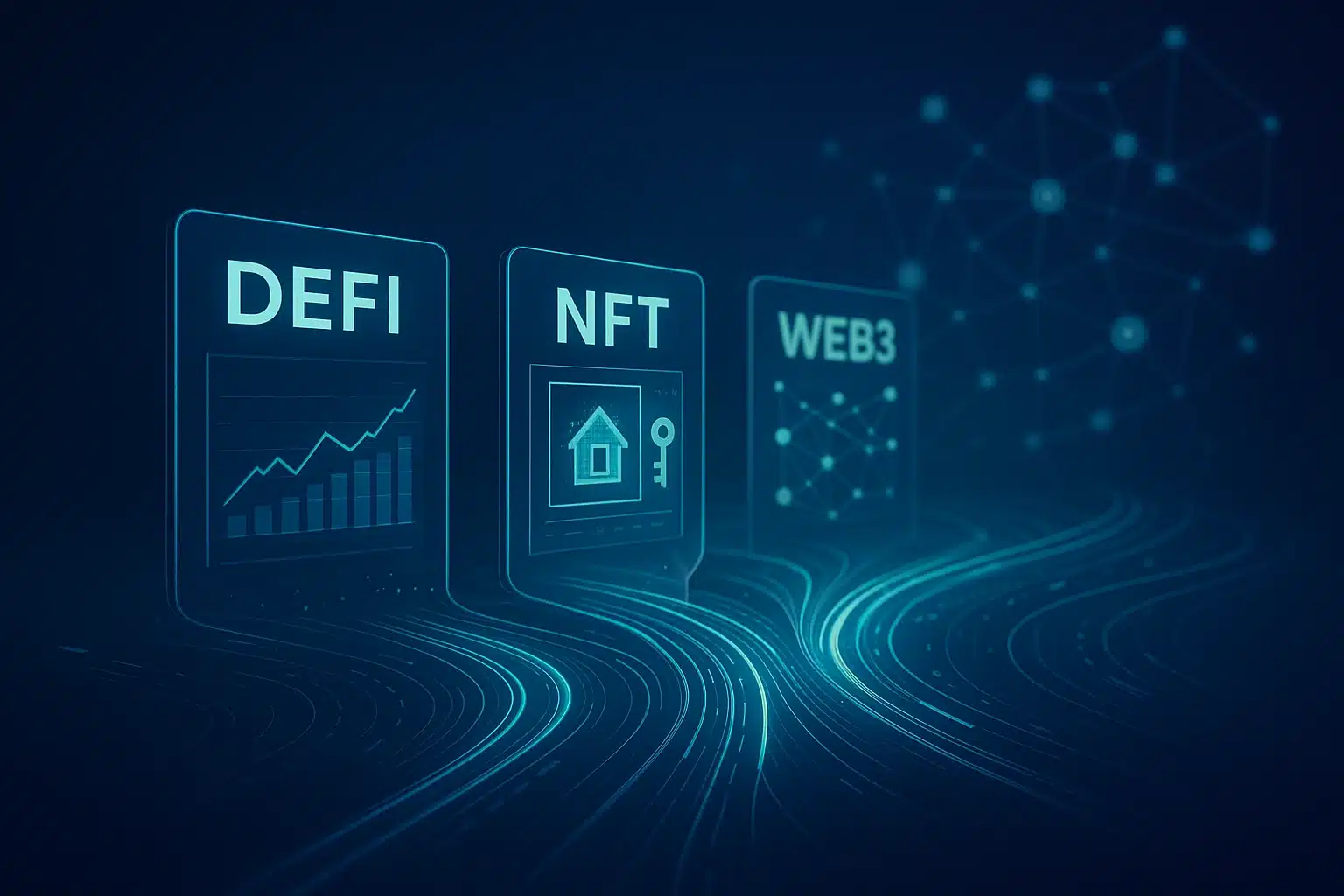
The conversation has moved beyond price speculation. We are currently witnessing a massive maturation phase—often termed the “utility turn”—where the underlying technologies of Decentralized Finance (DeFi), Non-Fungible Tokens (NFTs), and Web3 are converging to solve real-world problems.
This analysis cuts through the hype to examine the data-driven trends shaping the next decade of digital ownership and finance, helping you determine if and how these asset classes fit into your broader nest egg.
The early days of DeFi were characterized by high yields and even higher risks, often referred to as “permissionless wild west.” We are now transitioning into DeFi 3.0, a phase defined by the integration of institutional-grade security, Artificial Intelligence (AI), and regulatory compliance.
While traditional banking relies on intermediaries, DeFi 3.0 uses smart contracts to automate complex financial transactions. The scale of this shift is measurable. Market projections suggest that by 2026, DeFi protocols could capture over 25% of global spot trading volume. Furthermore, the sector for crypto-backed loans is expected to exceed $90 billion, indicating that borrowing and lending against digital assets is becoming a cornerstone of modern liquidity strategies.
The next generation of DeFi isn’t just about connecting a wallet; it’s about automated efficiency. New protocols are integrating AI to manage risk and optimize yield in real-time. For an investor, this means the potential for “set-it-and-forget-it” strategies that were previously only available to high-frequency trading firms.
However, this sophistication comes with a caveat. As these systems become more complex, the barrier to entry shifts from access to understanding. Evaluating a DeFi protocol now requires assessing its code audits and risk management frameworks, not just its advertised interest rate.
If you have been following the headlines, you likely know that the speculative bubble around digital art has burst. Recent studies indicate that nearly 95% of NFTs created during the 2021 boom are now considered effectively valueless.
For the savvy investor, this correction is a positive signal. It clears the market of noise and highlights the projects with genuine staying power. The NFT market is evolving from speculative collectibles to functional utility assets.
The resilience of the NFT market is now found in utility and community governance. We are seeing a transition where NFTs represent:
Despite the market correction, the forecast for the NFT sector remains robust, with projections exceeding $85 billion by 2025. The value is no longer in the image itself, but in the rights and access that the token confers to the holder. When evaluating an NFT project today, the primary question is no longer “Will this sell for more later?” but rather “What utility does this asset provide right now?”
Web3 represents the internet’s transition from a platform-based economy (where companies own your data) to a token-based economy (where you own your data). The Web3 market is projected to reach $81.5 billion by 2030, growing at a Compound Annual Growth Rate (CAGR) of 43.7%.
The critical trend driving this growth is interoperability. In the past, digital assets were trapped on their specific blockchains (e.g., Ethereum assets couldn’t easily move to Solana). New “Cross-Chain” technologies are breaking down these silos.
For a decentralized economy to function, assets must move freely. Cross-chain solutions currently power approximately 60% of active DeFi users. This fluidity reduces friction and allows capital to flow to where it is most efficient.
For the investor, this trend emphasizes the importance of “infrastructure plays”—investing in the protocols that act as the bridges and highways of the digital economy, rather than just the cars driving on them.
No evaluation of emerging tech is complete without a hard look at the risks. As financial tools become more accessible, the responsibility for security shifts entirely to the user.
Integrating these emerging assets into your financial plan requires a shift in perspective. It is not about replacing your traditional savings or retirement accounts, but understanding where high-risk, high-growth potential fits within a diversified strategy.
When evaluating a new crypto opportunity, apply this four-step diligence framework:
While the infrastructure has matured significantly with the entry of institutional players and better auditing practices, DeFi entails “smart contract risk” that traditional finance does not. It should still be treated as a high-risk asset class.
Speculative art NFTs are generally too volatile for core retirement planning. However, tokenized real-world assets or utility-based NFTs may eventually play a role in a diversified portfolio as the technology stabilizes.
Web3 allows creators to monetize directly without intermediaries taking large cuts. This shift is creating new income streams and asset classes derived from digital content and intellectual property.
The convergence of DeFi, NFTs, and Web3 suggests a future where finance is more automated, interoperable, and user-owned. While the days of easy speculative wins may be behind us, the era of genuine utility is just beginning.
As you look to build your own nest egg, approach this sector with curiosity but caution. Use the calculators and resources available to model how different growth scenarios—and potential losses—would impact your timeline to financial independence. The goal is not just to participate in the trend, but to ensure every asset you hold serves your ultimate goal of financial security.